
 By california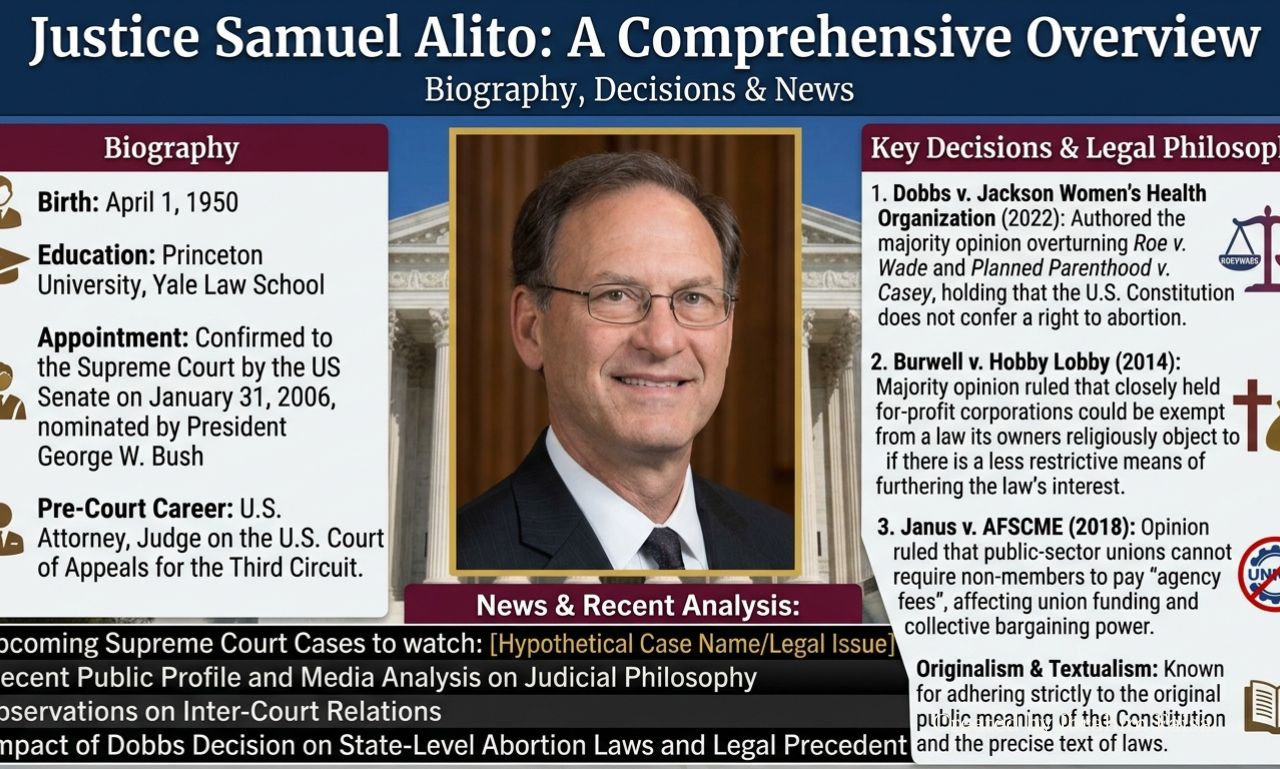
Samuel Alito is a name that resonates in the corridors of power. As one of the current justices of the U.
S. Supreme Court, his influence shapes some of the most critical legal debates in America today. With a career spanning decades, Alito’s decisions have sparked both admiration and controversy. Whether you agree with him or not, understanding his journey provides valuable insight into contemporary jurisprudence.
From his early days to high-stakes rulings on fundamental issues, Alito’s life story is as compelling as it is complex. Let’s dive deeper into his biography, explore key decisions he has made, and uncover how this influential figure continues to impact American law and society today.
Early Life and Education
Samuel Anthony Alito Jr. was born on April 1, 1950, in Trenton, New Jersey. Growing up in a close-knit Italian-American family, he developed an early passion for reading and learning. His father worked as a lawyer and later became the executive director of the New Jersey Office of Legislative Services.
Alito attended Princeton University, where he graduated with honors in 1972. His time at Princeton not only sharpened his intellect but also fostered his interest in public policy and law.
He continued to Harvard Law School, earning his Juris Doctor degree in 1975. During this period, Alito honed his analytical skills and engaged with various legal theories that would influence his future career.
These formative years laid the groundwork for Alito’s eventual ascent to one of the highest courts in the land. They shaped both his worldview and judicial philosophy significantly.
Career in Law and Politics
Samuel Alito’s journey in law began with a strong foundation. After earning his law degree from Yale, he quickly made a name for himself in various roles. His career took off as a clerk for Justice William Brennan on the U.
S. Supreme Court.
Alito then moved into public service, working as an assistant U.
S. attorney and later serving as the U.
S. Attorney for the District of New Jersey. These positions honed his legal skills and provided insight into federal judicial processes.
In 2006, President George W. Bush nominated him to the Supreme Court, further solidifying his influence within American jurisprudence. Throughout his career, Alito has been known for his meticulous approach to cases and a distinct conservative perspective that shapes many of his rulings today.
His tenure reflects not only personal ambition but also significant shifts in national legal landscapes during pivotal moments in history.
Appointment to the Supreme Court
Samuel Alito’s journey to the Supreme Court began in 2005. Nominated by President George W. Bush, he was selected to fill the seat left vacant by Justice Sandra Day O’Connor’s retirement.
His confirmation process stirred considerable debate. Senate hearings showcased his judicial philosophy and previous rulings. Critics expressed concerns about his stance on various issues, including abortion rights and executive power.
Despite opposition from some senators, Alito garnered enough support for a successful confirmation. He took his oath of office on January 31, 2006.
Since joining the court, he has often leaned towards conservative interpretations of the law. His decisions reflect an approach grounded in traditional values and a strict reading of constitutional text.
Alito’s appointment marked a significant shift in the ideological balance of the Supreme Court at that time, solidifying a more conservative majority as key cases loomed ahead.
Major Decisions and Stances
Samuel Alito’s judicial philosophy reflects a commitment to originalism and textualism. His decisions often emphasize the importance of interpreting the Constitution as it was originally intended.
One landmark case is *Burwell v. Hobby Lobby Stores, Inc.* Here, he sided with employers who objected on religious grounds to providing contraceptive coverage under the Affordable Care Act. This decision underscored his stance on religious freedom over government mandates.
In *Dobbs v. Jackson Women’s Health Organization*, Alito played a pivotal role in overturning Roe v. Wade. His opinion stressed states’ rights regarding abortion laws, igniting widespread debate across the nation.
Additionally, in cases involving free speech and campaign finance like *Citizens United v. FEC*, he supported expansive interpretations that favor political expression and financial contributions to campaigns.
These decisions illustrate how Alito engages with complex legal issues while shaping contemporary American law through his rulings.
Controversies and Criticisms
Samuel Alito has not been without his share of controversies and criticisms throughout his career. Many have scrutinized his judicial philosophy, particularly regarding issues like reproductive rights and campaign finance.
His 2022 decision in Dobbs v. Jackson Women’s Health Organization sparked significant backlash. Critics argue that it overturned decades of precedent on abortion rights, igniting protests across the nation.
Alito’s dissenting opinions often reflect a strict interpretation of the Constitution, which some label as overly conservative or out of touch with modern societal values. This polarization fuels ongoing debates about the role of the Supreme Court in contemporary America.
Moreover, comments made during public speeches have drawn ire from various groups. Some perceive them as disrespectful to those who oppose him or dismissive of differing viewpoints.
These elements contribute to an ever-evolving discourse around Alito’s influence within the judiciary and American society at large.
Current News and Updates
Samuel Alito continues to be a focal point in American legal discussions. Recently, he has made headlines for his outspoken views on various pressing issues.
In the wake of significant rulings, Alito’s opinions are under scrutiny. His stances often align with a more conservative interpretation of the Constitution. This perspective shapes ongoing debates regarding individual rights and state powers.
Alito recently addressed an audience at a legal conference, emphasizing his commitment to judicial independence. He expressed concerns about external pressures influencing court decisions.
As new cases come before the Supreme Court, observers eagerly anticipate how Alito will contribute to pivotal judgments. His insights and interpretations can sway not just public opinion but also future legislation across the nation.
Media outlets frequently cover his latest speeches and opinions, showcasing both support and opposition from various political factions. The dialogue surrounding Alito remains dynamic as society grapples with evolving legal landscapes.
Impact on the Supreme Court
Samuel Alito’s presence on the Supreme Court has significantly shaped its direction. His judicial philosophy often leans towards a strict interpretation of the Constitution, influencing how cases are adjudicated.
Alito’s conservative viewpoints have contributed to pivotal rulings that reflect a more traditionalist approach. This perspective can be seen in landmark decisions surrounding issues such as abortion rights and religious freedoms.
His influence extends beyond mere votes. Alito articulates his opinions with clarity, often swaying public discourse around contentious topics. As he engages in debates during court sessions, his reasoning sets precedents for future justices.
With each ruling, Alito leaves an imprint on American law and society at large. Observers note that his style fosters a certain dynamism within the existing court framework, potentially guiding its trajectory for years to come.
Legacy of Samuel Alito
Samuel Alito’s legacy is marked by a distinct judicial philosophy that emphasizes originalism. This approach has shaped many of his rulings, particularly regarding the Constitution’s interpretation.
His decisions often reflect a commitment to preserving traditional values. Issues like abortion rights and religious freedoms have become hallmarks of his tenure.
Alito’s influence extends beyond individual cases; he has contributed to shaping the Court’s ideological balance. His assertive stance in several high-profile cases has sparked discussion about the future direction of American law.
In academic circles, scholars continue to examine his opinions for their long-term implications on civil liberties.
As debates around key legal issues persist, Alito’s role within the Supreme Court will undoubtedly remain a critical point of reference for both supporters and critics alike.
Conclusion
Samuel Alito’s journey through life and law offers a compelling glimpse into the workings of one of America’s most influential judicial figures. His early experiences shaped his views, while his career path showcased a commitment to legal principles that have often sparked debate.
His appointment to the Supreme Court marked a significant shift in American jurisprudence. Alito has made landmark decisions that touch on critical issues like reproductive rights, religious freedom, and corporate regulation. Each ruling reflects not just his judicial philosophy but also reveals larger societal divides.
Controversies surrounding him highlight the challenges faced by any high-profile judge navigating public opinion and political pressures. Yet, amidst criticism, Alito remains steadfast in articulating his perspectives with clarity.
Current events continue to place Alito at the center of discussions about key legal changes affecting millions across the nation. As new cases come before the court, observers eagerly await how he will shape future interpretations of constitutional law.
The impact of Samuel Alito extends beyond individual rulings; it reverberates throughout the fabric of American society and governance. His legacy is still being written as each decision influences generations to come.
As we follow along with Samuel Alito’s ongoing story within our judiciary system, it’s clear that both supporters and critics alike will be keeping a close eye on what unfolds next in this pivotal chapter for American law.